May 27, 2026
How beach parking affects your car paint in Redondo Beach
Beach parking in Redondo Beach leaves salt film, sand, and sun-baked spots on paint. Here is how South Bay drivers keep damage from sticking.
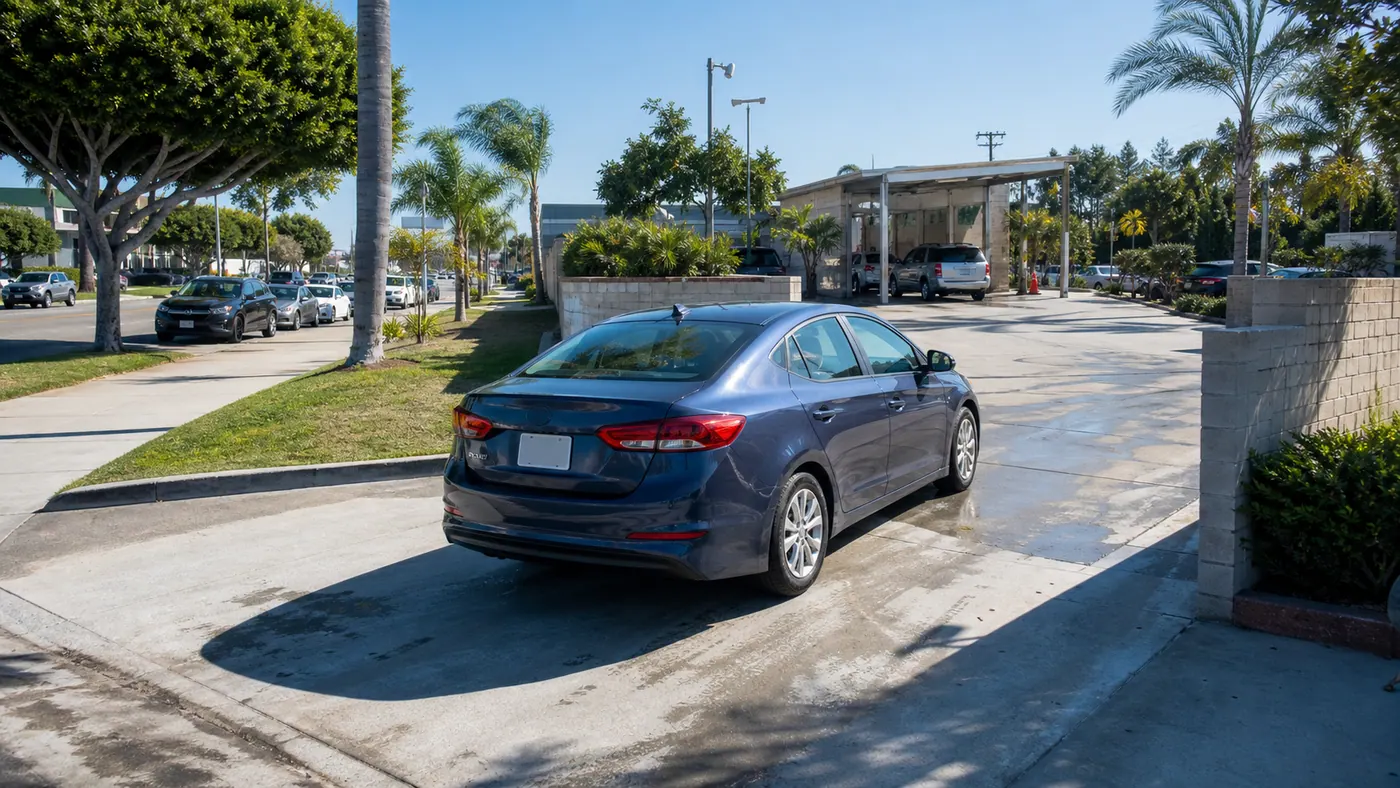
You can park at Torrance Beach for two hours, drive home, and think the car looks fine. Then Monday morning the hood feels dusty, the windshield edge looks spotted, and the rear bumper has new marks from loading chairs and coolers.
That is beach parking at work.
Around Redondo Beach, Hermosa Beach, Manhattan Beach, and the west side of Torrance, a parked car collects more than ocean air. It sits in salty mist, marine layer moisture, gritty pavement dust, sandy feet, sunscreen hands, and whatever gets dragged across the paint while everyone packs up.
That is the part many drivers miss. The short drive to the beach is usually not what makes the car look tired. The parked hours do more damage than the miles.
Beach parking is harder on paint than the drive there
Coastal driving spreads road film. Beach parking adds time.
When the car sits in an open lot or along the curb near the water, residue has time to settle and stay put. Sun warms the panels. Marine layer brings moisture back. People lean on the doors, rest bags on the bumper, and slide umbrellas, strollers, or boards across the hatch opening.
That mix is why beach parking often creates a different mess than a normal South Bay errand run.
Three things make it worse:
- Still air turns into settling time. Salt and fine dust do not have to hit the car hard to matter. If they stay on the paint for hours, they start becoming a film.
- The lot itself adds grit. Lower doors, rocker panels, and rear bumpers pick up dust and sand kicked around by feet, tires, and beach gear.
- Loading and unloading creates contact. A lot of what looks like “sand damage” on paint is really scuffing from bags, chairs, towels, and dry wiping after the fact.
That is why a beach-day car in Redondo can come home dirtier than a commuter car that spent all day inland. The problem is exposure plus contact, not just proximity to the water.
The first places the damage usually shows up
Most owners check the hood first. It is not always the earliest warning sign.
After South Bay beach parking, the finish usually starts telling the story in these areas:
- Windshield edge, hood, and roof. These flat surfaces catch the salty film and show water spotting fastest once the sun comes out.
- Lower doors and rear bumper. This is where beach-lot grit and sandy foot traffic leave dusty streaks and light abrasion.
- Hatch lip, trunk edge, and door handles. These are the contact zones for coolers, towels, boards, sunscreen hands, and wet fingers.
- Mirror caps and trim. Small gloss-black and painted trim pieces often look older before the main panels do.
That is a useful local tell. If the rear hatch on your SUV looks worse than the hood, the issue is probably not only salt air. It is beach loading.
The same goes for family cars doing the Redondo waterfront, Riviera Village, and school-pickup loop in the same weekend. Paint wear starts in the places people touch and gear brushes past.
One extra night outside is where the cleanup gets harder
A lot of beach-day damage becomes visible the next morning, not the same afternoon.
Here is why. The car comes home with a light layer of salt, dust, and sandy residue. Then it sits outside overnight. The marine layer adds moisture back onto that residue. By late morning, the sun dries it down again.
That second cycle is what makes one easy cleanup turn into a more stubborn one.
It matters even more if the car lives outdoors in North Redondo Beach or on a street that gets full afternoon sun. A garage-kept car inland can often wait a little longer. A curb-parked beach car usually should not.
If the car already tends to show spotting, this is also where timing matters. The wash window advice in best time to wash your car in Redondo Beach becomes a lot more important after a beach day because you are dealing with fresh residue, not ordinary dust.
That is one of the biggest hidden costs of waiting. You are not just leaving the car dirty. You are giving the coastal cycle another turn.
A better post-beach cleanup plan for South Bay drivers
Most beach cars do not need a complicated recovery routine. They need a faster one.
The smart sequence looks like this:
- Clear the obvious mess first. Empty out wet towels, shake off heavy sand, and get the chairs, toys, or gear out of the cargo area.
- Do not dry-wipe the paint. If the hood or hatch looks dusty, resist the parking-lot towel move. That is how grit gets dragged into the finish.
- Wash sooner if the car sat near the water. Same day is ideal after a long beach stop, especially in summer or after windy afternoons.
- Match the wash to the real mess. Exterior only is fine when the outside looks hazy but the cabin is still clean. If the mats, cup holders, and door sills look like they brought the shoreline home, step up to a full-service wash.
This is where a lot of local drivers save themselves money. Timely maintenance is cheaper than waiting until the paint feels rough and the interior needs a full reset.
If the problem is mostly outside, compare the wash packages and keep it simple. If the car came back with gritty carpet edges, sandy hatch seams, or sunscreen residue on interior panels, the beach probably affected both sides of the vehicle.
When a wash is enough and when you should step up
A normal wash is enough more often than people think.
Stay with a wash when:
- the paint looks dusty or lightly salty
- the windshield has fresh haze but no baked-in spotting
- the bumper and lower doors just need the grit removed
- the sand inside is still loose and recent
Move up from maintenance when:
- the finish still feels rough after drying
- the bumper or hatch lip has scuffed-looking marks that do not clean up
- sand is packed into seams, seat rails, or cargo edges
- trim still looks chalky or smeared after a normal wash
At that point, the detail menu is the better next stop. If you want a quick second opinion before you come in, the contact page is the easiest place to start.
Beach parking is part of living here. The goal is not to avoid it. The goal is to stop one easy beach day from turning into a car that feels permanently one step behind.
If your weekend usually includes the sand, the lot, and the drive back through the South Bay, clean the car before that residue gets another day to settle in. South Bay drivers usually notice the difference fast: cleaner glass, less haze on the hood, fewer scuffs around the hatch, and a car that does not feel beach-worn by Tuesday.
Up next
First time here? Unlock your free wash.
Built for sandy South Bay cars, clear prices, and no membership games.
Keep reading
More from the blog
-
Jun 2026
Searching for a car wash on Torrance Blvd? Here is how South Bay drivers pick the right stop
Looking for a car wash on Torrance Blvd? Use this local guide to choose exterior, full-service, or detailing based on beach sand, traffic film, and timing.
-
Jun 2026
Why bird droppings damage car paint faster near the beach
Beach parking, hot paint, and salty air make bird droppings harder on your finish. Here is how South Bay drivers should clean them fast.
-
Jun 2026
Why your car smells musty after beach trips in the South Bay
Damp towels, sandy mats, and marine layer moisture can make beach cars smell stale fast. Here is how South Bay drivers stop it early.