May 16, 2026
How long before salt air damages your car in Redondo Beach?
Salt air does not wreck paint overnight, but coastal parking speeds up haze, spots, and trim wear. Here's what South Bay drivers should watch.
Park outside near the beach for a few days in Redondo and you can usually spot the pattern by the weekend: a hazy windshield, a dusty hood that does not feel smooth, and trim that looks a little drier than it did on Monday.
That is salt air at work.
It does not destroy paint in one night, and it does not mean every South Bay car is headed for rust. The bigger issue is repetition. Ocean air leaves behind a thin salty film, the marine layer keeps it damp, and the sun bakes it in. If that cycle repeats week after week, the finish ages faster than most drivers expect.
Salt air works in layers, not one dramatic hit
People often imagine salt damage as something obvious and immediate. Around Redondo Beach, it is usually quieter than that.
The first stage is a film on the paint and glass. Then come the little signs: water spots that seem harder to remove, black trim that looks tired sooner, and wheels that never quite look clean for long.
That is why Hermosa Beach, Manhattan Beach, and South Redondo cars tend to show coastal wear sooner than a similar car parked farther inland. A Torrance commuter who garages the car at night can usually stretch washes a bit longer. A car that sleeps on the street west of PCH usually cannot.
The first places South Bay drivers notice it
Salt air does not land evenly. It shows up first where moisture sits and where grime already collects.
- Hood and roof
- Windshield edges and mirrors
- Wheels and lug areas
- Chrome or gloss-black trim
- Door jambs and hatch seams
- Roof racks, badges, and around the fuel door
On beach cars, those spots get another layer from sand, sunscreen hands, and parking-lot dust. After a windy afternoon near Torrance Beach or the Hermosa Pier lots, lower doors and rear panels can look dirtier than the rest of the car because the grit gets kicked up from the pavement, not just the ocean.
Beach parking speeds up the clock
The beach trip itself is only part of the story. The bigger factor is what happens after you drive home.
If the car sits with salt on it through cool overnight air, the marine layer adds moisture back to the surface. Then the sun comes out, especially on open curb parking near Riviera Village, The Strand, or North Redondo’s west side, and dries that residue in place.
That cycle is why one beach-heavy week can make a car look older than a normal week of commuting.
A few local patterns make it worse:
- Summer street parking close to the water
- Cars that sit for days between errands
- Family SUVs that shuttle chairs, towels, and sandy feet
- Rideshare and commuter cars that stack beach grime on top of everyday road film
The point is not to panic after every beach day. It is to avoid letting a salty film become the car’s normal condition.
The mistake that scratches paint fastest
Most coastal damage does not start with the wash. It starts with the wipe.
When a car looks dusty after beach parking, people often run a dry towel over the hood, wipe the glass at a stoplight, or brush sand off the tailgate by hand. That is where trouble starts. Salt residue holds onto grit, and grit dragged across warm paint leaves fine marring and swirl marks.
If your car has been parked near the beach, the safer move is simple:
- Rinse first or get it washed.
- Dry after the loose grit is gone.
- Save spot-cleaning for bird droppings or obvious messes, not a whole dusty panel.
That matters even more on dark paint. Black, navy, and deep gray cars in Redondo, Hermosa, and Manhattan Beach usually show this wear first because the light scratching becomes visible sooner.
What to do after a beach-heavy week
You do not need a complicated routine. You need a repeatable one.
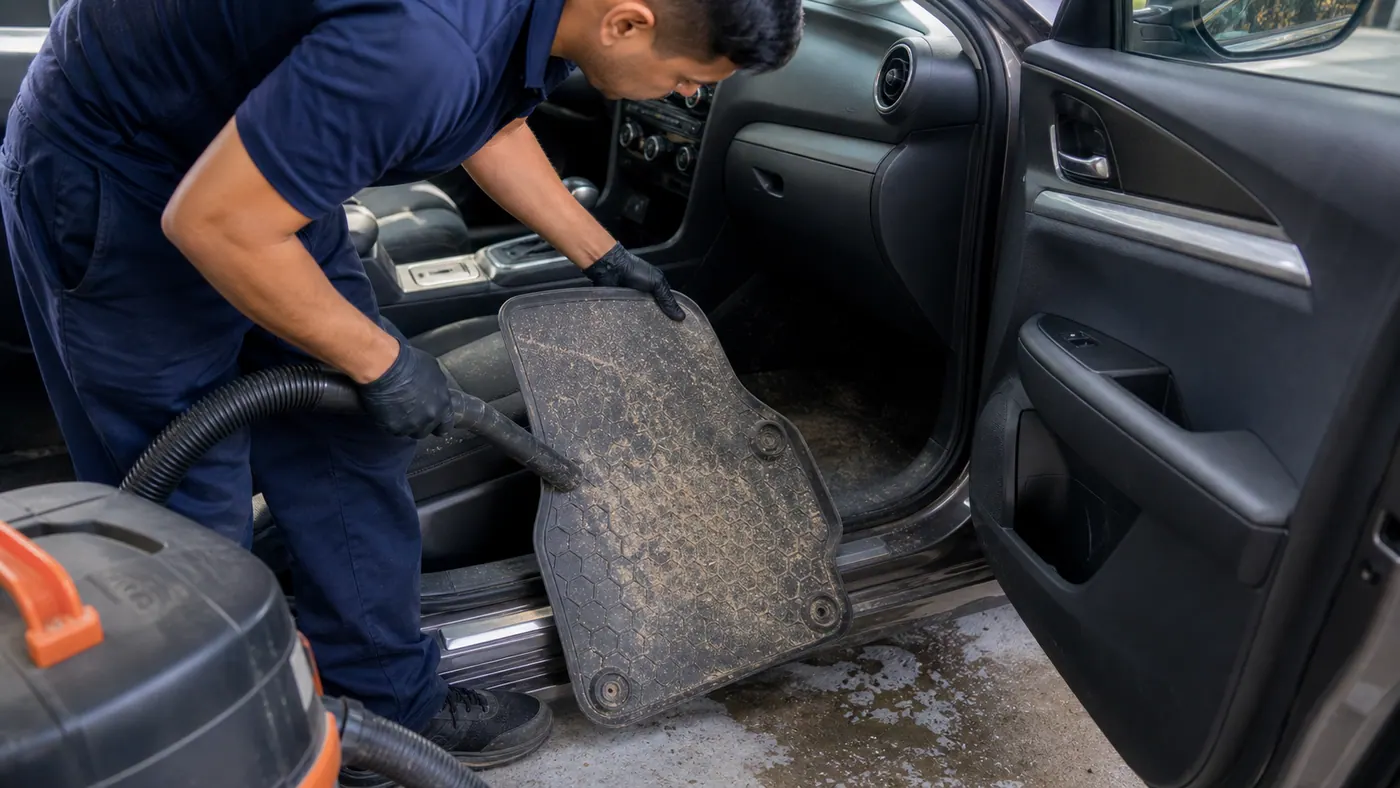
If the outside looks filmy but the cabin is fine, a quick exterior wash is usually enough. If the mats, cargo area, and door sills are also full of sand, step up to full service so the inside gets handled too. Our wash packages make that split pretty easy.
For cars that live near the coast, a few habits go a long way:
- Wash sooner after windy beach days or long curb parking stretches
- Vacuum sand before it gets ground into mats and seat rails
- Clean door jambs and hatch seams instead of only the visible panels
- Add protection from the detail menu if the paint no longer feels smooth after a normal wash
For many South Bay drivers, the best pattern is a regular maintenance wash plus an occasional wax or detail before the finish starts looking tired.
When a wash stops being enough
A normal wash removes fresh salt film. It does not fix the wear that has already settled in.
If you notice rough paint, stubborn spotting, faded trim, or wheels that still look chalky after cleaning, that is usually the line between maintenance and correction. At that point, protection matters more than another delayed rinse.
That is especially true for cars that spend their week outdoors in North Redondo Beach, beach-adjacent Hermosa, or along the Manhattan Beach side of PCH. Coastal exposure is manageable, but it is easier to stay ahead of it than to reverse it later.
If your car lives outside near the water, a practical Redondo Beach car wash routine is one of the cheapest ways to slow that wear down. If you want a second set of eyes on the paint, trim, or interior sand buildup, stop by 617 Torrance Blvd and we can point you toward the right wash or detail without overcomplicating it.
Up next
First time here? Unlock your free wash.
Built for sandy South Bay cars, clear prices, and no membership games.
Keep reading
More from the blog
-
Jun 2026
Searching for a car wash on Torrance Blvd? Here is how South Bay drivers pick the right stop
Looking for a car wash on Torrance Blvd? Use this local guide to choose exterior, full-service, or detailing based on beach sand, traffic film, and timing.
-
Jun 2026
Why bird droppings damage car paint faster near the beach
Beach parking, hot paint, and salty air make bird droppings harder on your finish. Here is how South Bay drivers should clean them fast.
-
Jun 2026
Why your car smells musty after beach trips in the South Bay
Damp towels, sandy mats, and marine layer moisture can make beach cars smell stale fast. Here is how South Bay drivers stop it early.