May 28, 2026
How to remove sunscreen from your car interior after South Bay beach days
Sunscreen smears, sand, and salty hands build up fast after beach days. Here's how South Bay drivers can clean car interiors before stains set.
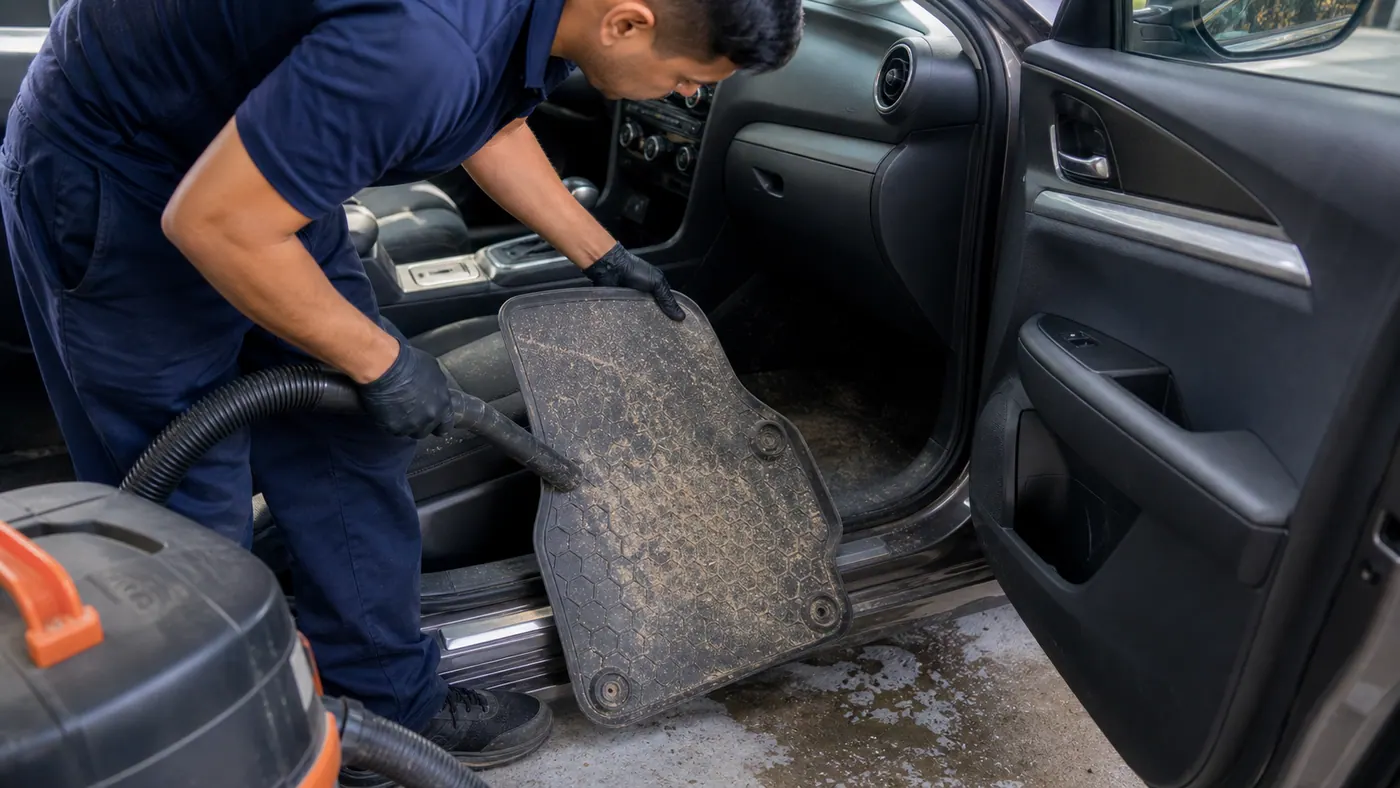
Beach days are great for you. They are rough on the inside of the car.
Sand gets all the attention, but sunscreen is usually the mess that lingers. It shows up as pale fingerprints on dark door panels, a cloudy smear on the center console, and that sticky feel on armrests a day or two after the beach trip is over.
If you drive between Redondo Beach, Hermosa Beach, Manhattan Beach, and Torrance all summer, this is one of the most common interior-cleaning problems to stay ahead of. The fix is not complicated. The timing matters.
Why sunscreen shows up so fast in South Bay cars
Sunscreen does not stay neatly on your skin once the beach day starts.
It mixes with sweat, salt air, fine sand, and heat. Then it gets transferred to whatever you touch on the way home: door pulls, steering wheel, seat edges, console trim, cup holders, and the back of the front seats.
South Bay cars get hit with a specific pattern:
- you load up in a beach parking lot with sandy legs and lotion on your hands
- the car sits closed up in warm sun
- the residue softens, spreads, and picks up grit
- by the next morning, the interior looks duller than it did when you parked
That is why the marks often look worse a day later. They are not always fresh smudges. They are yesterday’s residue after it had time to bake into the surface.
Check the small touch points first
Most people go straight to the seats. Usually the earlier clues are somewhere else.
Look at:
- the inside door pull on the driver’s side
- the edge of the center console where your forearm rests
- window-switch panels and glossy trim
- the side bolster you slide across when getting out
- the back of the front seats if kids climbed in with sunscreen still on
Those areas collect the mess first because they get touched the most. On black or dark gray interiors, they also show the residue immediately.
This is where a lot of drivers misread the problem. They think the cabin looks dusty, so they do a quick dry wipe. That usually spreads the film and drags beach grit across the surface at the same time.
Handle it the same day if you can
You do not need a full interior overhaul after every beach stop. You do want a same-day reset while the residue is still fresh.
Keep it simple:
- Let the surface cool down first. Hot plastic and hot leather are harder to clean cleanly.
- Shake out the obvious sand before you start wiping anything.
- Use a clean microfiber cloth, not the old towel from the trunk.
- Wipe with a mild soap-and-water mix or an interior-safe automotive cleaner that matches the material.
- Dry the area with a second soft cloth so the residue does not keep smearing around.
If you are dealing with cloth seats or carpet, blot first instead of grinding the lotion deeper into the fabric. If it is on screens or piano-black trim, stay gentle. Those surfaces scratch faster than people expect.
For family cars that bring half the beach home every weekend, the broader cleanup plan in this South Bay family interior guide is worth keeping in your back pocket.
What makes the mess harder to remove
Three things turn sunscreen from a quick annoyance into a deeper cleanup:
- waiting through a hot afternoon or overnight parking
- scrubbing with household cleaners that are too aggressive for interior materials
- treating the residue like dust instead of a sticky film
Owner-manual guidance across automakers is pretty consistent here: start mild, use products made for automotive interiors, and test first on a less visible spot. That matters even more on coated trim, leather, and painted interior surfaces.
If your car lives outside in North Redondo Beach or does the regular beach-and-errands loop through Hermosa Beach and Manhattan Beach, the heat load inside the cabin is usually what makes the residue set up fast.
The practical rule is easy: do not attack sunscreen marks with the strongest thing under the sink. That is how a cleanable smear turns into faded trim.
Decide between a quick reset and a deeper clean
Fresh sunscreen residue is usually a maintenance problem, not a rescue job.
A normal reset is often enough when:
- the marks are recent
- the surface is smooth plastic, vinyl, or leather
- the cabin mainly needs light wiping and a vacuum
- the sand has not been ground deep into carpet edges or seat seams
That is when a full-service wash makes sense. You get the outside cleaned, the interior vacuumed, and the most-used surfaces reset before the mess has time to settle in.
Move up to the detail menu when the sunscreen has been sitting for a while, the trim still looks cloudy after wiping, or the inside feels sticky even after a regular cleanup. That is especially common in perforated seats, textured trim, kid-heavy second rows, and cargo areas that also picked up wet towels or spilled drinks.
If you are farther inland in Torrance, you can sometimes stretch the cleanup window a bit. Cars parked closer to the coast usually cannot. Beach humidity, sand, and warm closed-up cabins are a bad combination for residue buildup.
A two-minute routine that saves the next morning
The easiest sunscreen cleanup is the one you prevent from setting up overnight.
Before you head home from the beach:
- knock the heavy sand off feet and bags
- keep one clean microfiber in the door pocket
- wipe obvious handprints off dark trim before they bake in
- pull damp towels out of the cargo area when you get home
That routine is small, but it saves a lot of second-day frustration.
South Bay drivers usually notice the same thing after they start doing it: the interior stays cleaner longer, the trim keeps its finish, and the car never reaches that sticky stage where everything starts to feel tired at once.
If the sunscreen marks are still fresh, a quick stop for a wash package is often enough. If they have baked into the cabin and the car needs a fuller reset, look at the detail menu or use the contact page before your next Redondo Beach run adds another layer.
Up next
First time here? Unlock your free wash.
Built for sandy South Bay cars, clear prices, and no membership games.
Keep reading
More from the blog
-
Jun 2026
Searching for a car wash on Torrance Blvd? Here is how South Bay drivers pick the right stop
Looking for a car wash on Torrance Blvd? Use this local guide to choose exterior, full-service, or detailing based on beach sand, traffic film, and timing.
-
Jun 2026
Why bird droppings damage car paint faster near the beach
Beach parking, hot paint, and salty air make bird droppings harder on your finish. Here is how South Bay drivers should clean them fast.
-
Jun 2026
Why your car smells musty after beach trips in the South Bay
Damp towels, sandy mats, and marine layer moisture can make beach cars smell stale fast. Here is how South Bay drivers stop it early.