May 21, 2026
Why black cars show water spots faster in Redondo Beach
Black cars near the coast show salt haze and water spots fast. Here is how South Bay drivers keep dark paint cleaner between washes.
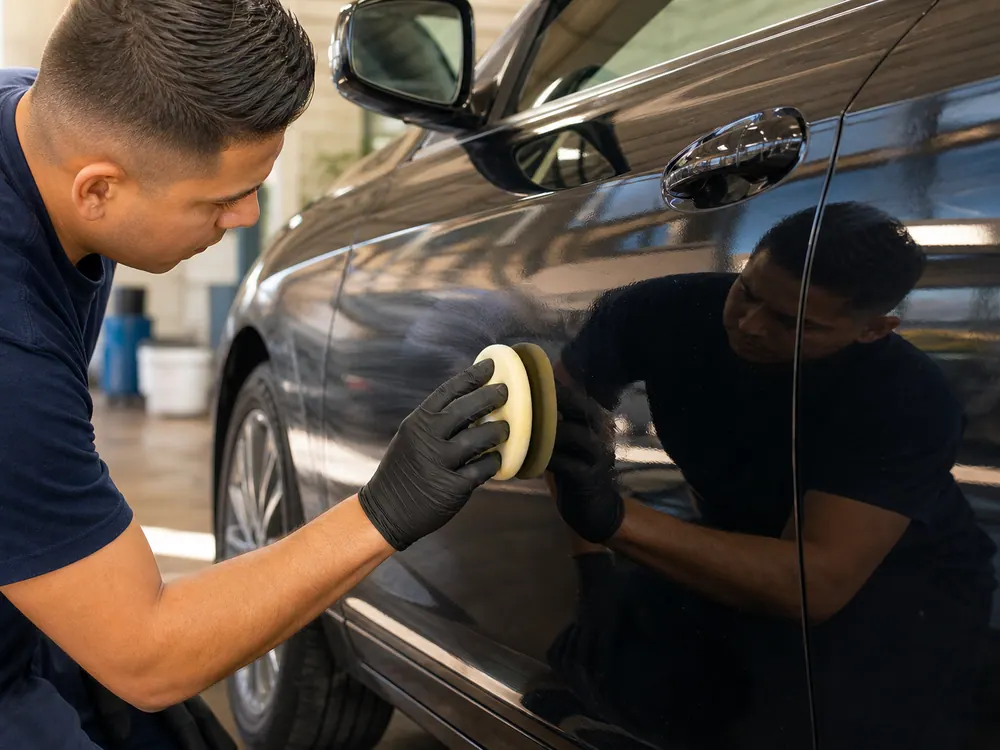
A black car can leave dinner in Riviera Village looking perfect and wake up the next morning with a light gray film across the hood. That does not mean the wash failed overnight.
Dark paint simply tells on the coast faster.
In Redondo Beach, Hermosa Beach, Manhattan Beach, and the western side of Torrance, a black finish makes marine-layer residue, salt air film, light dust, and sprinkler spots visible sooner than almost any other color. The car is not always dirtier than the white SUV parked next to it. You can just see the buildup first.
That is useful once you know what it means. A black car gives you early warnings, and a steady Redondo Beach car wash routine is cheaper than waiting for cloudy paint, etched spotting, or trim that never looks fully clean again.
Black paint turns a light coastal film into an obvious problem
South Bay drivers deal with a specific mix: overnight moisture, ocean salt in the air, road film from PCH and Hawthorne, and fine grit that settles after windy afternoons.
On silver or gray paint, that mix can stay subtle for a few extra days. On black paint, it shows up almost immediately on the flat panels first:
- hood
- roof
- trunk lid
- upper door surfaces
That is the first insight most owners miss. Black cars do not necessarily collect more contamination. They make normal contamination visible sooner.
A black sedan in Redondo Beach can look dull by Tuesday even if a lighter car parked beside it still looks decent from ten feet away.
Overnight parking matters more than most people think
The beach itself is not always the main culprit. Parking is.
If your car spends the night outside west of PCH, near King Harbor, along Catalina, or on a side street in Hermosa, the marine layer settles onto the paint before sunrise. Once the sun burns through, black panels warm up fast and that thin moisture dries into visible spotting.
That pattern is common on:
- cars parked nose-out on sunny streets
- vehicles sitting under sprinklers or misty irrigation overspray
- family SUVs that stay outside all week between errands
- commuter cars that get one hot half of the day in open parking lots
A garage-kept driver in Torrance can usually stretch things longer. A street-parked car in Hermosa Beach or Manhattan Beach usually cannot.
That difference matters because black paint absorbs heat faster once the cloud cover lifts. A faint film at 8:00 a.m. can look like obvious spotting by lunch.
Beach parking leaves marks in places owners do not check first
Most people inspect the hood first. On black cars, the earlier clues are often somewhere else.
Look at the gloss-black trim around the windows. Check the mirror caps. Check the top edge of the rear hatch if you load chairs, strollers, coolers, or boards after a beach stop. Those smaller areas usually show wear before the middle of the doors does.
That is the second insight: dark trim is often the warning light for the rest of the finish.
Beach parking adds a few very local problems:
- sunscreen hands on door handles and hatch lips
- sandy bags brushing the rear bumper
- salt haze on the windshield edge after a damp morning
- footprints and smudges around kid-entry zones on SUVs
If your car runs the Redondo Pier to Torrance Beach to school-pickup loop on weekends, those touch points build up quickly. Black paint makes every one of them stand out.
Small habits buy black cars extra clean days
You do not need a fussy routine. You need a smarter one: avoid the dry wipe, deal with bird droppings and sprinkler spotting the same day, and match the wash rhythm to where the car actually lives.
For many local drivers, a good rule looks like this:
- Garage-kept black cars in North Redondo Beach or inland Torrance can often do well on a 10-to-14-day wash rhythm.
- Street-parked cars closer to the water usually look better with a weekly reset.
- Family vehicles and commuter cars bouncing between Redondo Beach, Hermosa, Manhattan Beach, and summer traffic on PCH benefit from more frequent exterior care and a regular interior vacuum.
If the exterior is the real issue, one of the current wash packages is usually enough to knock the haze back before it turns stubborn. If the mats, cupholders, and door sills look like the whole beach came home with you, a fuller service makes more sense.
The right time to move from wash to detail
Black paint is unforgiving, but it is also honest.
If the finish comes clean and glossy after a wash, you are still in maintenance mode. If the hood stays cloudy in direct sun, the roof feels rough after drying, or the mirror caps and trim still look chalky, that is the line where a wash stops solving the problem.
That is the third insight: on black cars, the surface tells you earlier when protection or correction is overdue.
At that point, the detail menu is the better place to start. Dark paint tends to reveal etched spotting, neglected trim, and old wipe marks faster than lighter colors do, so waiting longer rarely makes the next step cheaper.
The coast is generous with views and not especially generous with black paint. A black car can still look sharp year-round in the South Bay if you stay ahead of the film instead of reacting to the damage.
If your car is already starting to look gray between errands, compare the wash packages, look at the detail menu if the spotting feels baked in, or use the contact page before your next beach weekend stacks another layer on top.
Up next
First time here? Unlock your free wash.
Built for sandy South Bay cars, clear prices, and no membership games.
Keep reading
More from the blog
-
Jun 2026
Searching for a car wash on Torrance Blvd? Here is how South Bay drivers pick the right stop
Looking for a car wash on Torrance Blvd? Use this local guide to choose exterior, full-service, or detailing based on beach sand, traffic film, and timing.
-
Jun 2026
Why bird droppings damage car paint faster near the beach
Beach parking, hot paint, and salty air make bird droppings harder on your finish. Here is how South Bay drivers should clean them fast.
-
Jun 2026
Why your car smells musty after beach trips in the South Bay
Damp towels, sandy mats, and marine layer moisture can make beach cars smell stale fast. Here is how South Bay drivers stop it early.