February 19, 2026
Why you should wash your car after it rains in Southern California
Rain in Southern California isn't a clean rinse — it deposits salt, dust, and road film that bake into your paint. Wash within 48 hours. Here's why and how.
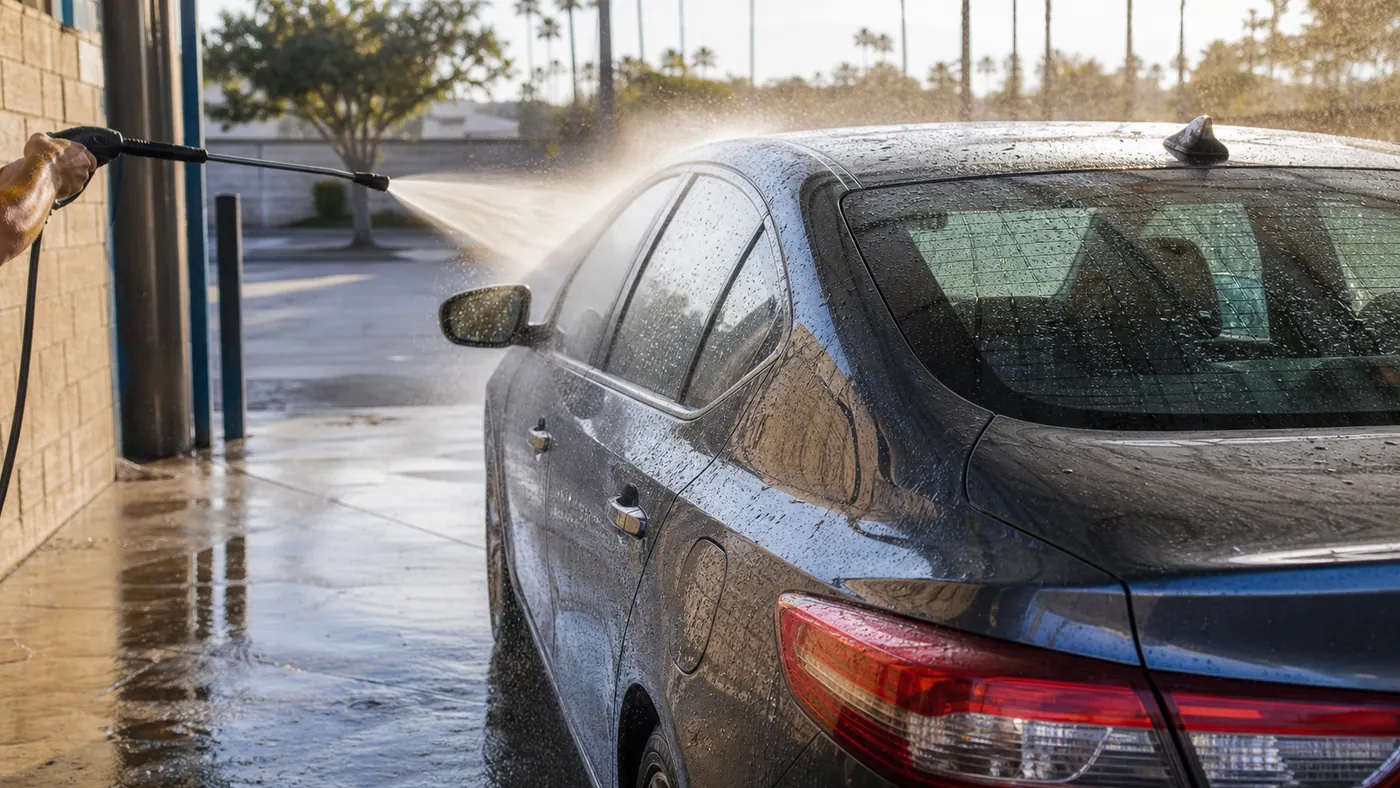
Rain makes a car look rinsed for about five minutes. Then the sun comes out, the water dries, and the real problem shows up — water spots, streaks, and a hazy film that doesn’t wipe away.
In Southern California, rain isn’t a clean rinse. It pulls dust, salt, pollen, and road film out of the air and drops it onto your paint. Then dirty water runs across the hood, roof, and glass. When it dries, the dissolved minerals stay behind.
That’s why washing after rain matters — and why timing matters more than the package.
Rain picks up what was already in the air
The South Bay gets a constant mix of ocean salt aerosol, traffic film, construction dust, pollen, and brake dust. During dry stretches, all of that sits on the road surface and floats in the air.
When rain finally arrives, it collects that grime and spreads it across your car. The first storm after a dry spell is always the dirtiest.
If your car is parked outside in Redondo Beach, Hermosa Beach, Manhattan Beach, Torrance, or North Redondo Beach, the storm also mixes with salt air and marine layer residue already sitting on the paint.
The sun makes it worse
The bigger problem is what happens after the storm.
Southern California weather flips from rain to sun within hours. Dirty water dries on hot panels, and the remaining minerals and grime bond to the surface. That’s when water spots, streaks, and the dull film show up — and they don’t lift with a regular wipe-down.
Glass, black paint, chrome trim, and horizontal surfaces (hood and roof) show it first.
The 48-hour rule
If your car was outside during rain, wash it within 48 hours.
You don’t need the biggest package. A quick exterior wash is usually enough to remove the dirty residue before it bakes in.
Wash sooner if:
- The car is dark-colored
- You park near the beach
- The sun came out right after the rain
- You see spots on the hood or windows
- The car already had dust or salt on it before the storm
Don’t dry-wipe a dirty, rained-on car
It’s tempting to grab a towel and wipe off the spots. Don’t.
If the surface has grit on it, dry-wiping drags that grit across the paint. That’s how light scratches and swirl marks happen. Rinse and wash first, then dry with clean towels — or stop in and let us hand-dry it with soft cloths.
What wash should you choose after rain?
For basic post-rain cleanup, start simple — an exterior wash is usually enough to remove road film and spots. If the car has been parked outside for a while, step up to a wash with foam polish or ceramic protection.
If the inside is also damp, sandy, or messy from the week, choose full-service and reset the cabin too. We break that decision down in full-service vs exterior car wash.
For broader context on wash cadence year-round, see how often to wash your car in Southern California.
After the next storm, stop by 617 Torrance Blvd — see the current wash packages. Catch you on the next wave.
Up next
First time here? Unlock your free wash.
Built for sandy South Bay cars, clear prices, and no membership games.
Keep reading
More from the blog
-
Jun 2026
Searching for a car wash on Torrance Blvd? Here is how South Bay drivers pick the right stop
Looking for a car wash on Torrance Blvd? Use this local guide to choose exterior, full-service, or detailing based on beach sand, traffic film, and timing.
-
Jun 2026
Why bird droppings damage car paint faster near the beach
Beach parking, hot paint, and salty air make bird droppings harder on your finish. Here is how South Bay drivers should clean them fast.
-
Jun 2026
Why your car smells musty after beach trips in the South Bay
Damp towels, sandy mats, and marine layer moisture can make beach cars smell stale fast. Here is how South Bay drivers stop it early.